Case Published Updated Topic: healthcare operations

Designing the Message as Care

How a Jefferson team treated patient communication as service delivery through a reusable Epic message system, visual assets, and a workflow staff could carry across care gaps.
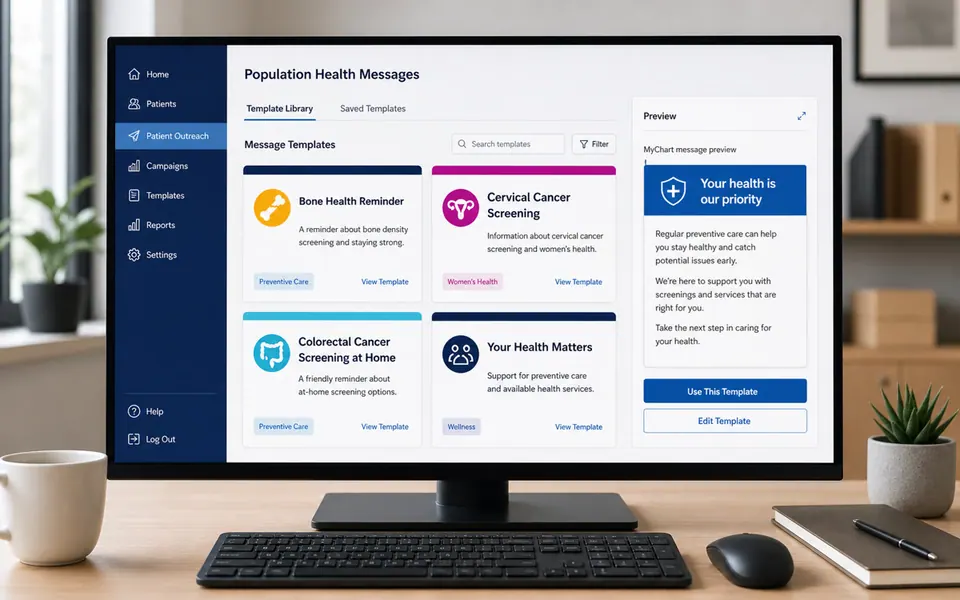
A preserved Jefferson Population Health message-system cover showing reusable patient outreach graphics on a desktop monitor.
Historical project visual for the message-system Case; it contains no patient records and is not a current Jefferson workflow.

Operating context

Jefferson Population Health

March 2023–January 2024

Role relationship
Message-system designer and builder
Contribution
I designed and built the patient-message layer: reusable visual assets and Epic message templates, implementation documentation, and staff training. Marketing reviewed brand use, Population Health leadership reviewed operations, and the relevant clinical or program owners retained authority for clinical wording, care-gap requirements, and approval. Copy development was collaborative. The program manager and director managed existing workqueues and data pulls; I did not own eligibility logic, source extracts, workqueue infrastructure, Jefferson's enterprise Epic environment, or clinical policy.
Result
A reusable library of roughly 25 message and graphic assets, a tested cross-device receiving pattern, and a repeatable delivery workflow that staff were proud to use. The implementation record does not establish a numeric or causal response effect, patient comprehension, accessibility conformance, or clinical outcomes.

The message is part of the care experience

Patient communication is part of the care experience because it shapes whether a person can recognize, understand, and act on what the organization is asking them to do.

A patient message can be technically delivered and still feel like an afterthought. Important outreach often arrived as a block of administrative text: accurate enough to send, but hard to recognize, scan, or act on while a person was already balancing work, family, uncertainty, or a full portal inbox.

Receiving-experience reconstruction

The same outreach job can arrive with a different sense of care.

A later editorial reconstruction of the cross-device comparison used during implementation. It is not a live MyChart screen, a preserved patient message, or evidence that either treatment changed patient behavior.

Ordinary text-heavy output

A reminder from your care team

Important information is present, but the subject and next action compete with the body.

Action-oriented hierarchy

One recognizable subject.
One clear next action.

Headline
Names the communication job
Companion text
Carries the complete meaning
Response path
Sets a local, non-urgent route

Visual hierarchy supports the message; it does not replace readable text or local workflow.

During cross-device demonstrations, we compared an ordinary, text-heavy portal message with an action-oriented message that used a recognizable Jefferson visual hierarchy, a clear next step, and companion copy. The comparison made implementation behavior inspectable on phones and computers. It did not measure comprehension, accessibility conformance, trust, response, or clinical outcomes.

That receiving experience was the point of the work, and the image supported the words and delivery path as one deliberate part of a service the patient had to receive and use.

Why the communication layer mattered

Population Health was asking people to take different next steps across recurring care gaps: schedule a mammogram, return a FIT kit, follow up on a DEXA message after a fracture, or understand what the outreach team could help arrange. Each task carried its own clinical and operational authority, but the receiving problem was familiar: a person had to recognize the subject, find the action, understand the support route, and know what would happen after responding.

Treating the message as service delivery meant making the handoff legible through approved text, visual emphasis, a delivery channel that worked on the receiving device, and a staff workflow that could be repeated without starting over. The graphic served that handoff without carrying a promise that it would change behavior.

Building inside distributed authority

The Population Health team already had workqueues and a rudimentary reusable Epic message mechanism. I learned the available Epic functionality, sought information from a capacity-constrained Epic team, and implemented the richer message layer rather than handing over a finished specification. I added reusable Epic message templates with selectable elements, links, visual assets, delivery behavior, implementation notes, and staff training. I also substantially implemented the Population Health messaging side of referral scheduling tickets, helping the team connect a MyChart scheduling ticket to a patient message, an image, or an actionable link. I did not design Jefferson's enterprise referral or scheduling-ticket capability.

The surrounding authority stayed distributed: the program manager and director managed the existing workqueues and data pulls; Marketing reviewed brand use and helped make the materials institutionally usable; Population Health leadership reviewed operational use; and the relevant clinical or program owner remained responsible for clinical wording, care-gap requirements, and approval. I contributed to the patient-facing copy, but copy development was collaborative, and I could not authorize alone the sentence a patient received.

That division made the system more useful by giving each reusable message a named source of truth, a local owner, and a clear point at which clinical judgment or a program decision took over.

A reusable library across care gaps

Across the project, I created roughly 25 reusable message or graphic assets spanning multiple care gaps. The count refers to individual reusable pieces, not 25 campaigns or complete translated families. Some Spanish variants existed, but I do not have a record of who translated or reviewed them.

The shared Canva files were generic and contained no PHI. When a message needed patient-specific context, that personalization stayed inside the authenticated Epic/MyChart workflow, keeping the repeatable design layer separate from the patient record and current clinical source.

The team installed MyChart on phones and used multiple phones and computers to send and compare demonstrations. Staff were proud to use the materials, and leaders valued the collaboration with Marketing. The implementation record contains no denominator, comparison design, measured response effect, or staff-time study from which to estimate a numeric benefit.

The visual choices were intentional rather than clinical code. Jefferson's palette supplied intentional emphasis within a branded message system; emphasis could draw attention to serious information, an actionable link, or positive news. Words, labels, links, and structure still carried the meaning without color, and current adopters must check the exported asset and its receiving surface again.

I attended the American Public Health Association's 2023 Policy Action Institute in Washington, D.C., during the project period. The event influenced how I thought about public-facing health communication. It was an influence, not a source for the complete Jefferson method or an endorsement of these materials.

Four messages, kept as historical objects

Four Jefferson-branded graphics remain from the project and appear here at their natural aspect ratios. The accompanying text describes each graphic's delivery setting and the details a current adopter would need to revalidate. Phone numbers, scheduling instructions, and care-gap wording inside the images are historical, not current calls to action.
Historical communication 01

Mammogram scheduling

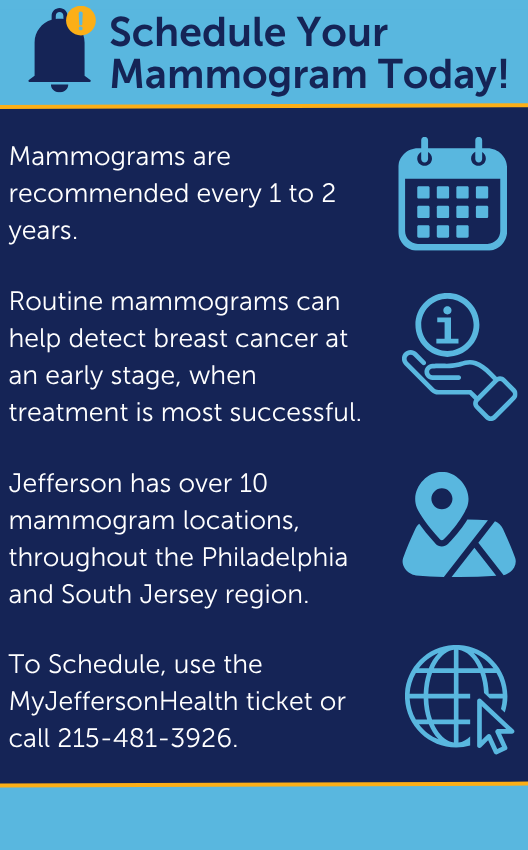
A direct subject and repeated visual cues made the scheduling job recognizable before a recipient reached the supporting detail.

Historical Jefferson mammogram scheduling graphic headed Schedule Your Mammogram Today. It states that mammograms are recommended every one to two years, describes early detection and Jefferson locations, and ends with a historical MyJeffersonHealth ticket or telephone scheduling instruction.
Intended action
Schedule a mammogram through the route approved for the historical program.
Visual decision
A direct headline, recognizable subject icons, and one prominent scheduling instruction.
Delivery setting
Paired with complete approved text in a non-urgent portal message or letter.
Revalidate now
Current age and interval language, locations, source authority, and contact route.
Read the complete historical graphic text

Transcription of the preserved image for accessibility. Its wording and contact details are historical evidence, not current guidance or a live contact route.

Mammogram scheduling graphic

Schedule Your Mammogram Today!

Mammograms are recommended every 1 to 2 years.

Routine mammograms can help detect breast cancer at an early stage, when treatment is most successful.

Jefferson has over 10 mammogram locations, throughout the Philadelphia and South Jersey region.

To Schedule, use the MyJeffersonHealth ticket or call 215-481-3926.

Accessible historical equivalent

Mammogram scheduling graphic

Transcription of the preserved image. Its wording and contact details are historical evidence, not current guidance or a live contact route.

Schedule Your Mammogram Today!

Mammograms are recommended every 1 to 2 years.

Routine mammograms can help detect breast cancer at an early stage, when treatment is most successful.

Jefferson has over 10 mammogram locations, throughout the Philadelphia and South Jersey region.

To Schedule, use the MyJeffersonHealth ticket or call 215-481-3926.

Inspect full artifact

Evidence from the field

Mammogram scheduling

Historical Jefferson mammogram scheduling graphic headed Schedule Your Mammogram Today. It states that mammograms are recommended every one to two years, describes early detection and Jefferson locations, and ends with a historical MyJeffersonHealth ticket or telephone scheduling instruction.

Exact historical Jefferson project graphic from the March 2023–January 2024 implementation. Its visible instructions and phone number are preserved evidence inside the image, not current scheduling guidance or a live contact route.

Open dedicated artifact page
Exact historical Jefferson project graphic from the March 2023–January 2024 implementation. Its visible instructions and phone number are preserved evidence inside the image, not current scheduling guidance or a live contact route.

Historical communication 02

FIT-kit return

The return task led; acknowledgement and a route for questions followed without turning the image into the complete message.

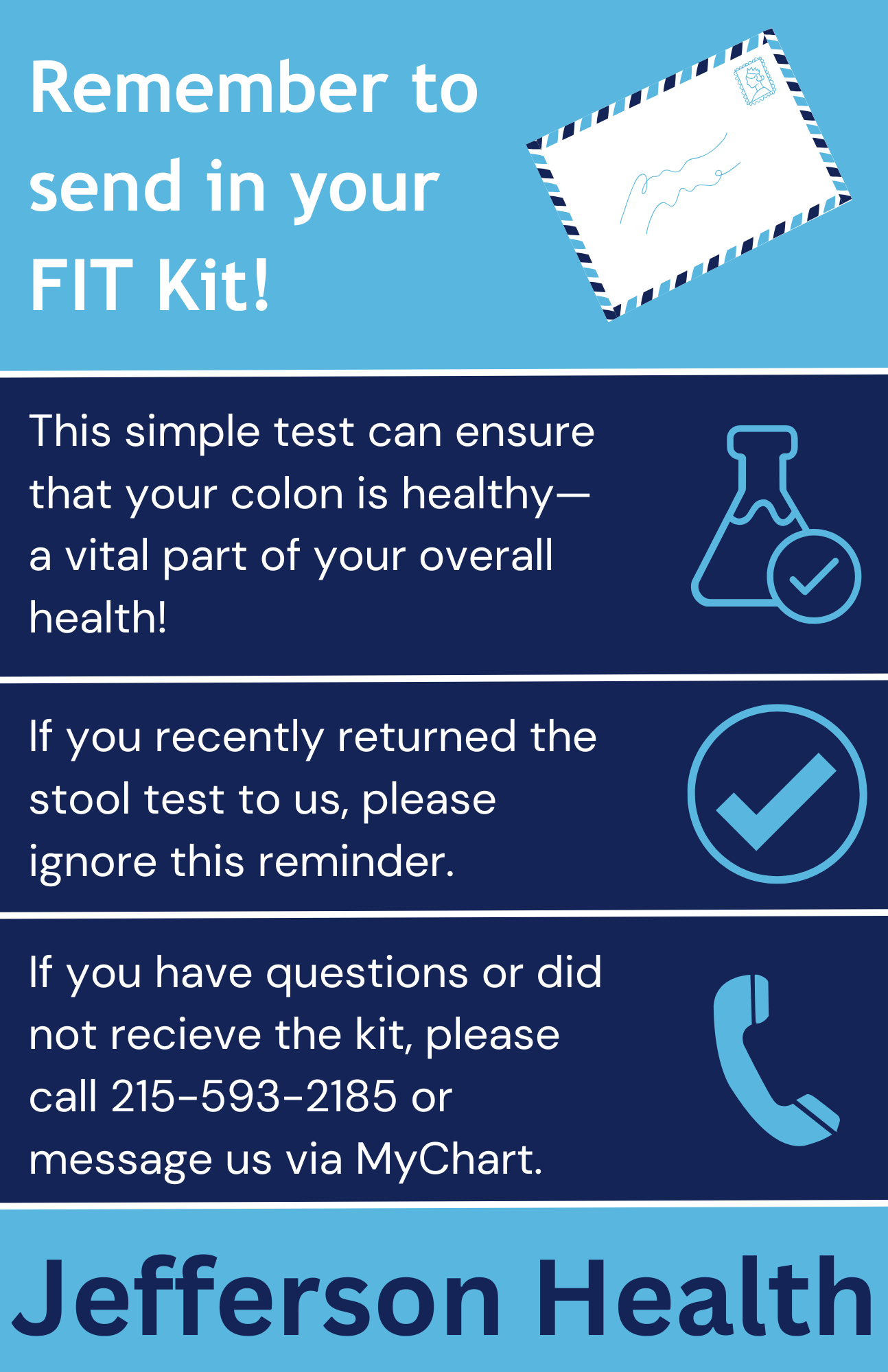
Historical Jefferson FIT-kit reminder headed Remember to send in your FIT Kit. It asks the recipient to ignore the reminder if the stool test was already returned and otherwise shows a historical phone or MyChart support instruction for questions or a missing kit.
Intended action
Return the mailed FIT kit or ask the outreach team for help.
Visual decision
A concrete return reminder followed by acknowledgement and a small number of support choices.
Delivery setting
Paired with complete plain-text copy in MyChart or a letter.
Revalidate now
Kit instructions, approved support route, language, and the complete local return workflow.
Read the complete historical graphic text

Transcription of the preserved image for accessibility. Its wording and contact details are historical evidence, not current guidance or a live contact route.

FIT-kit return graphic

Remember to send in your FIT Kit!

This simple test can ensure that your colon is healthy—a vital part of your overall health!

If you recently returned the stool test to us, please ignore this reminder.

If you have questions or did not receive the kit, please call 215-593-2185 or message us via MyChart.

Jefferson Health

Accessible historical equivalent

FIT-kit return graphic

Transcription of the preserved image. Its wording and contact details are historical evidence, not current guidance or a live contact route.

Remember to send in your FIT Kit!

This simple test can ensure that your colon is healthy—a vital part of your overall health!

If you recently returned the stool test to us, please ignore this reminder.

If you have questions or did not receive the kit, please call 215-593-2185 or message us via MyChart.

Jefferson Health

Inspect full artifact

Evidence from the field

FIT-kit return

Historical Jefferson FIT-kit reminder headed Remember to send in your FIT Kit. It asks the recipient to ignore the reminder if the stool test was already returned and otherwise shows a historical phone or MyChart support instruction for questions or a missing kit.

Exact historical Jefferson project graphic from the March 2023–January 2024 implementation. The visible return instructions and support details are not current patient directions; a new program must revalidate them locally.

Open dedicated artifact page
Exact historical Jefferson project graphic from the March 2023–January 2024 implementation. The visible return instructions and support details are not current patient directions; a new program must revalidate them locally.

Historical communication 03

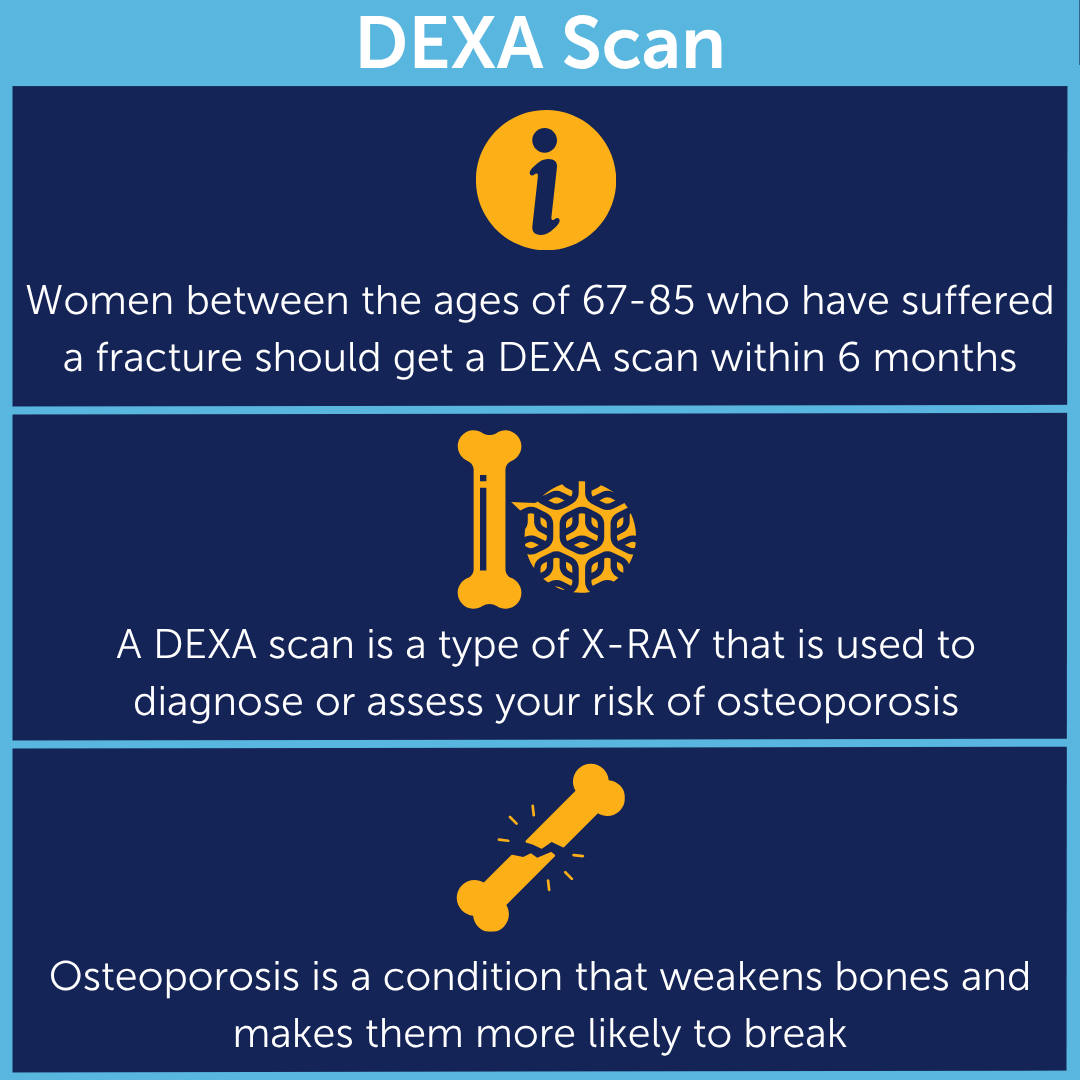
DEXA after fracture

Short explanatory panels kept the subject visible while words—not color or icons alone—carried the historical care-gap statement.

Historical Jefferson DEXA graphic with three panels. It gives historical age and timing language after a fracture, describes a DEXA scan as an X-ray used to assess osteoporosis risk, and explains that osteoporosis weakens bones.
Intended action
Follow up for a DEXA scan after a fracture under the historical program's criteria.
Visual decision
Three short panels and repeated visual cues make the subject recognizable before the details.
Delivery setting
Paired with approved care-gap copy in the local portal workflow.
Revalidate now
Clinical wording, eligibility, timing, and the current owner for patient questions.
Read the complete historical graphic text

Transcription of the preserved image for accessibility. Its wording and contact details are historical evidence, not current guidance or a live contact route.

DEXA scan graphic

DEXA Scan

Women between the ages of 67-85 who have suffered a fracture should get a DEXA scan within 6 months.

A DEXA scan is a type of X-RAY that is used to diagnose or assess your risk of osteoporosis.

Osteoporosis is a condition that weakens bones and makes them more likely to break.

Accessible historical equivalent

DEXA scan graphic

Transcription of the preserved image. Its wording and contact details are historical evidence, not current guidance or a live contact route.

DEXA Scan

Women between the ages of 67-85 who have suffered a fracture should get a DEXA scan within 6 months.

A DEXA scan is a type of X-RAY that is used to diagnose or assess your risk of osteoporosis.

Osteoporosis is a condition that weakens bones and makes them more likely to break.

Inspect full artifact

Evidence from the field

DEXA after fracture

Historical Jefferson DEXA graphic with three panels. It gives historical age and timing language after a fracture, describes a DEXA scan as an X-ray used to assess osteoporosis risk, and explains that osteoporosis weakens bones.

Exact historical Jefferson project graphic from the March 2023–January 2024 implementation. Its clinical statements remain historical wording, not current guidance or a universal DEXA protocol.

Open dedicated artifact page
Exact historical Jefferson project graphic from the March 2023–January 2024 implementation. Its clinical statements remain historical wording, not current guidance or a universal DEXA protocol.

Historical communication 04

Jefferson Population Health services

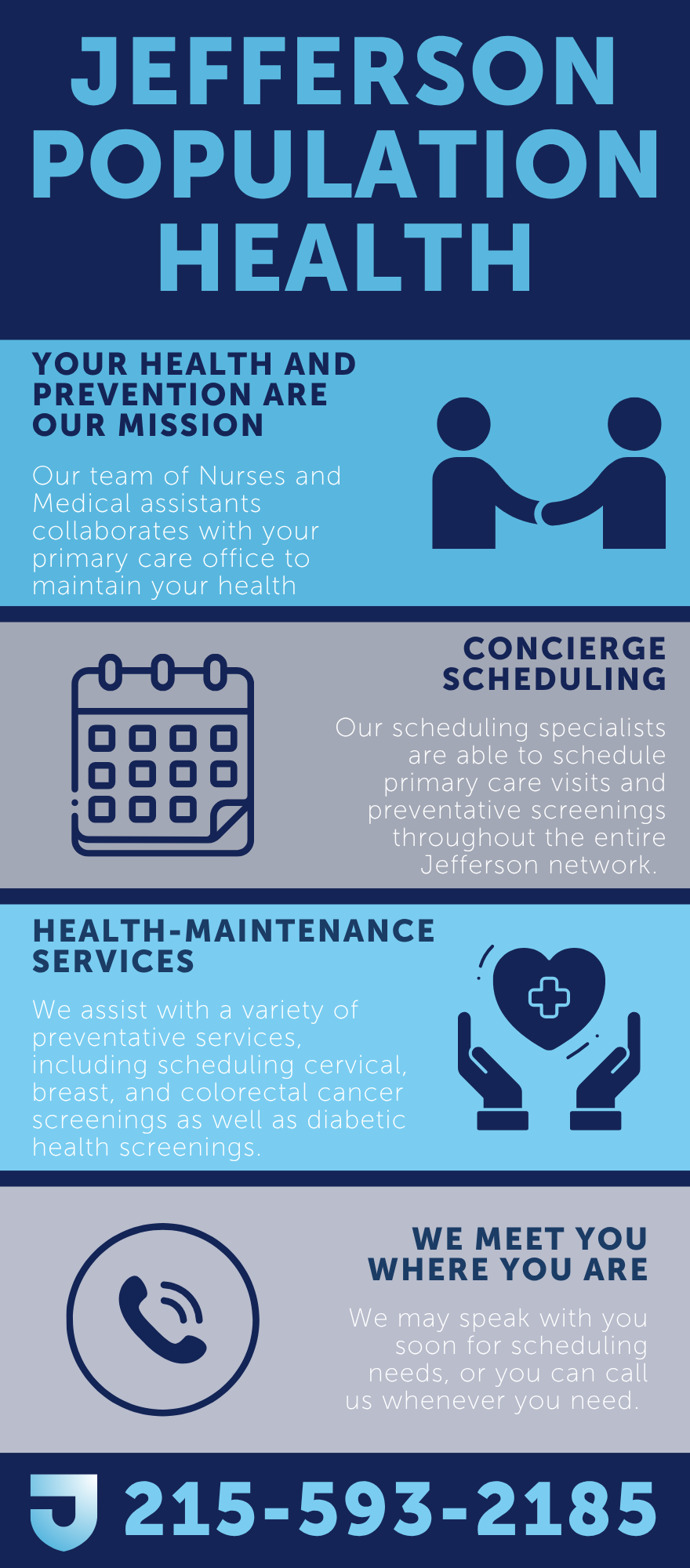
A long-form service explanation made the team itself legible: what it supported, how scheduling help worked, and where outreach fit.

Historical Jefferson Population Health graphic with sections describing the team's prevention mission, concierge scheduling, health-maintenance services, and outreach availability, ending with a historical telephone number.
Intended action
Understand the scheduling and preventive-care support the historical Population Health team offered.
Visual decision
A tall sequence of titled service sections makes a broad operating role scannable.
Delivery setting
Paired with a message body or letter that named the locally approved next step.
Revalidate now
Current services, owners, eligibility, language, and any intended contact route.
Read the complete historical graphic text

Transcription of the preserved image for accessibility. Its wording and contact details are historical evidence, not current guidance or a live contact route.

Jefferson Population Health services graphic

Jefferson Population Health

Your health and prevention are our mission. Our team of Nurses and Medical assistants collaborates with your primary care office to maintain your health.

Concierge scheduling. Our scheduling specialists are able to schedule primary care visits and preventative screenings throughout the entire Jefferson network.

Health-maintenance services. We assist with a variety of preventative services, including scheduling cervical, breast, and colorectal cancer screenings as well as diabetic health screenings.

We meet you where you are. We may speak with you soon for scheduling needs, or you can call us whenever you need.

215-593-2185

Accessible historical equivalent

Jefferson Population Health services graphic

Transcription of the preserved image. Its wording and contact details are historical evidence, not current guidance or a live contact route.

Jefferson Population Health

Your health and prevention are our mission. Our team of Nurses and Medical assistants collaborates with your primary care office to maintain your health.

Concierge scheduling. Our scheduling specialists are able to schedule primary care visits and preventative screenings throughout the entire Jefferson network.

Health-maintenance services. We assist with a variety of preventative services, including scheduling cervical, breast, and colorectal cancer screenings as well as diabetic health screenings.

We meet you where you are. We may speak with you soon for scheduling needs, or you can call us whenever you need.

215-593-2185

Inspect full artifact

Evidence from the field

Jefferson Population Health services

Historical Jefferson Population Health graphic with sections describing the team's prevention mission, concierge scheduling, health-maintenance services, and outreach availability, ending with a historical telephone number.

Exact historical Jefferson project graphic from the March 2023–January 2024 implementation. The services, contact details, and scheduling language shown inside the image are not a current Jefferson offer or live contact channel.

Open dedicated artifact page
Exact historical Jefferson project graphic from the March 2023–January 2024 implementation. The services, contact details, and scheduling language shown inside the image are not a current Jefferson offer or live contact channel.

The workflow had to carry the message

The reusable asset was only useful when the surrounding path held together. An outreach queue identified the work, a staff member made the call or left a voicemail, a reusable template supplied the approved message, an image or link supported the action, and the team documented what happened. Referral scheduling tickets gave some messages a direct operational handoff. The queue, data pull, and clinical decision did not become mine simply because I built the message layer that connected them.

The workflow reconstruction was created later to explain the pattern; its records and interface fragments are illustrative rather than a live Epic screenshot or contemporaneous project record.

Project workflow reconstruction

The reconstructed message workflow

The implemented pattern connected an existing queue to staff outreach, an approved reusable message, a supporting graphic or link, delivery, and documentation. Every visible record and interface fragment is illustrative—not a live Epic screen or patient record.
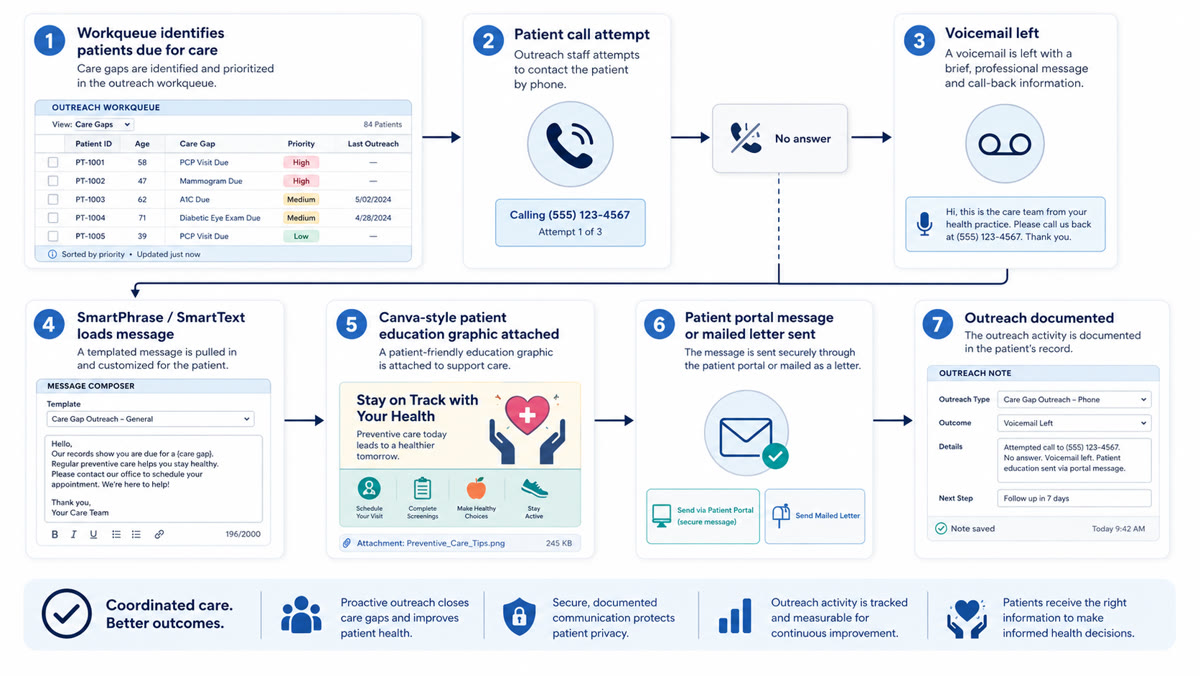
Reconstruction of the Jefferson Population Health messaging workflow from an existing workqueue through outreach contact, voicemail, reusable Epic message template, graphic attachment, MyChart or letter delivery, and documentation. All visible records, names, identifiers, telephone numbers, timestamps, and interfaces are illustrative.
  1. 01Existing queue

    Program leadership and managers manage the existing workqueue and underlying data pulls.

  2. 02Outreach contact

    A staff member calls, leaves a voicemail when appropriate, and follows the local script.

  3. 03Reusable message

    An approved Epic message template supplies complete text and selectable elements.

  4. 04Supporting asset

    A generic, no-PHI graphic or actionable link supports the message rather than replacing it.

  5. 05Local delivery

    The team confirms its actual MyChart, scheduling-ticket, or letter behavior before sending.

  6. 06Documentation

    The outreach action, response, and next owner are recorded in the approved local workflow.

A reconstruction of the implemented message path. The records and interface elements are illustrative rather than live Epic screens or patient data.

Inspect full artifact

Evidence from the field

The reconstructed message workflow

Reconstruction of the Jefferson Population Health messaging workflow from an existing workqueue through outreach contact, voicemail, reusable Epic message template, graphic attachment, MyChart or letter delivery, and documentation. All visible records, names, identifiers, telephone numbers, timestamps, and interfaces are illustrative.

A reconstruction of the implemented message path. The records and interface elements are illustrative rather than live Epic screens or patient data.

Open dedicated artifact page

Make the next local version useful

A patient-facing message works only as part of the service around it: a clear job, authorized words, a primary action, an intentional visual hierarchy, a tested receiving surface, and an owner who can answer what happens next. Each organization must configure and verify its own template objects, attachment behavior, routing, and response policy in Epic/MyChart.

The Canva-to-MyChart Field checklist provides a practical working sequence and distinguishes the Jefferson implementation from current guidance and local decisions. The colorectal screening project follows one care gap through its complete physical and clinical pathway; this project focuses on the reusable communication layer that can travel across care gaps.

Supporting documents

Carry the message system into local work

Use the checklist to define the communication job, write the complete text, pair the visual with the real delivery path, test the receiving experience, and assign the owners who keep the pattern usable.

Notes

The ONC SAFER Guide: Clinician Communication treats portal communication as a safety concern and recommends understandable content, language and literacy awareness, and clear response expectations. Jefferson's implementation history and outcomes come from the project record, not the guide.

The CDC plain-language guidance supports leading with the main message, using familiar words, and organizing copy for scanning. The Web Content Accessibility Guidelines 2.2 add text alternatives, contrast, resizing, reflow, and non-color cues. These are current practice references, not proof that a historical asset conformed everywhere.

HHS language-access guidance supports qualified interpretation or translation and meaningful access. The project record does not identify how its Spanish variants were translated or validated. MyChart's messaging help describes a non-urgent channel whose available recipients and local response policies vary by organization.

The APHA 2023 Policy Action Institute record places the event in Washington, D.C., on June 15–16, 2023 and describes its focus on policy, advocacy, and communications. Cole attended the event during the project and drew on it as an influence; Jefferson's message method was developed separately.