Walmart Oil Bay Time Study
An early-career reconstruction of how an experienced Walmart Auto Care Center technician separated two kinds of vehicle work, and what that taught me about motion, tools, and flow.
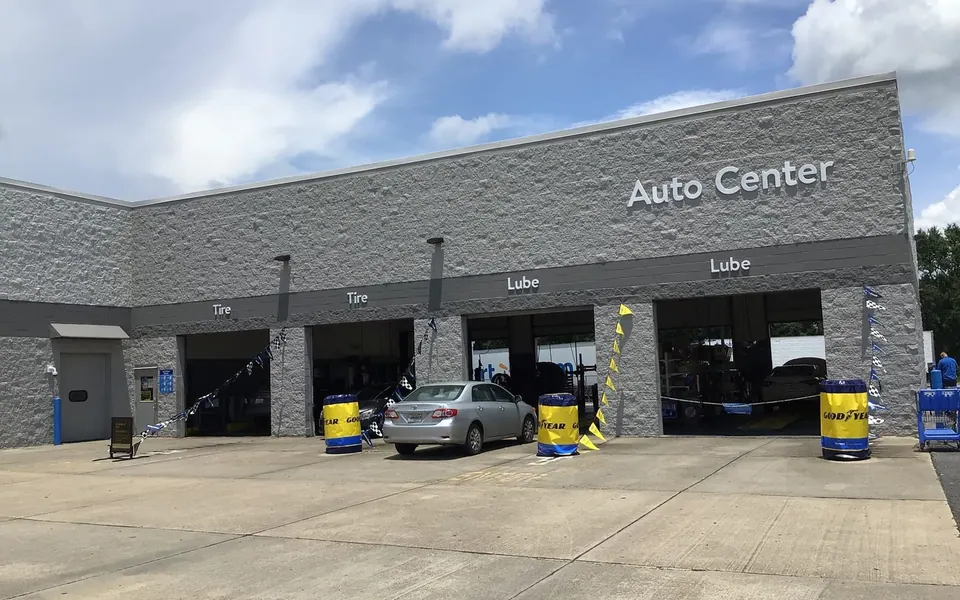
Role
Auto technician
Walmart Auto Care Center Early career, beginning at 18
My role and where the work stands
My role in the work
I observed, timed, and measured the mixed work; an experienced technician proposed and designed the routing, and I implemented it.
Where it stands
I implemented a two-route pattern, placing familiar standard work in one lane and specialty work in another; the design was intended to improve safety, while the surviving evidence supports the implemented routing rather than a measured causal safety effect.
Contents
A first operations education
I moved out at 18 and needed a job. My first operations education happened on the floor of a Walmart Auto Care Center near Concord, North Carolina, close to Charlotte Motor Speedway. I started as an auto technician doing oil changes, then learned tires. Race weekends, holidays, travelers, RVs, SUVs, and trucks made the shop feel less like one steady queue than a set of overlapping rhythms.
From the customer side, an oil change looked like a standard job. Inside the bays, familiar cars shared a queue with vehicles that drained slowly, needed different tools, or required different safety precautions. The average cycle time hid that difference.
Two kinds of work inside one average
I was quick on familiar standard cars, especially Honda Civic and Accord oil changes. My memory is that those jobs were generally under 8 minutes and sometimes near 5. Those are approximate recollections, not a surviving time sheet or a formal before-and-after study.
The harder jobs were a smaller but consequential population: luxury cars, diesel trucks, slow-drain vehicles, and cars whose plugs or access made the ordinary sequence awkward. When one of those jobs entered the same lane, its longer path could hold a line of standard work behind it, revealing two work populations that behaved differently beneath the shop's single oil-change average.
Watching, timing, and measuring the rhythm
I watched, timed, and measured the work on the floor. An experienced technician proposed and designed a routing that separated the two populations, and I implemented it in the bays. The change combined my observations with his routing judgment.
His exchange with me was close to verbatim: “I'll take the bottom on this car; you stay up top.” Here, bottom meant the normal pit work for the plug and filter. Up top meant tire pressure, vacuuming, washer fluid, and the other top-side tasks that could continue while the pit work was underway. On another car he would say, “I'll take this car by myself in the other bay.” The offers sounded ordinary and helpful, but they placed the right person, vehicle, bay, and tool together.
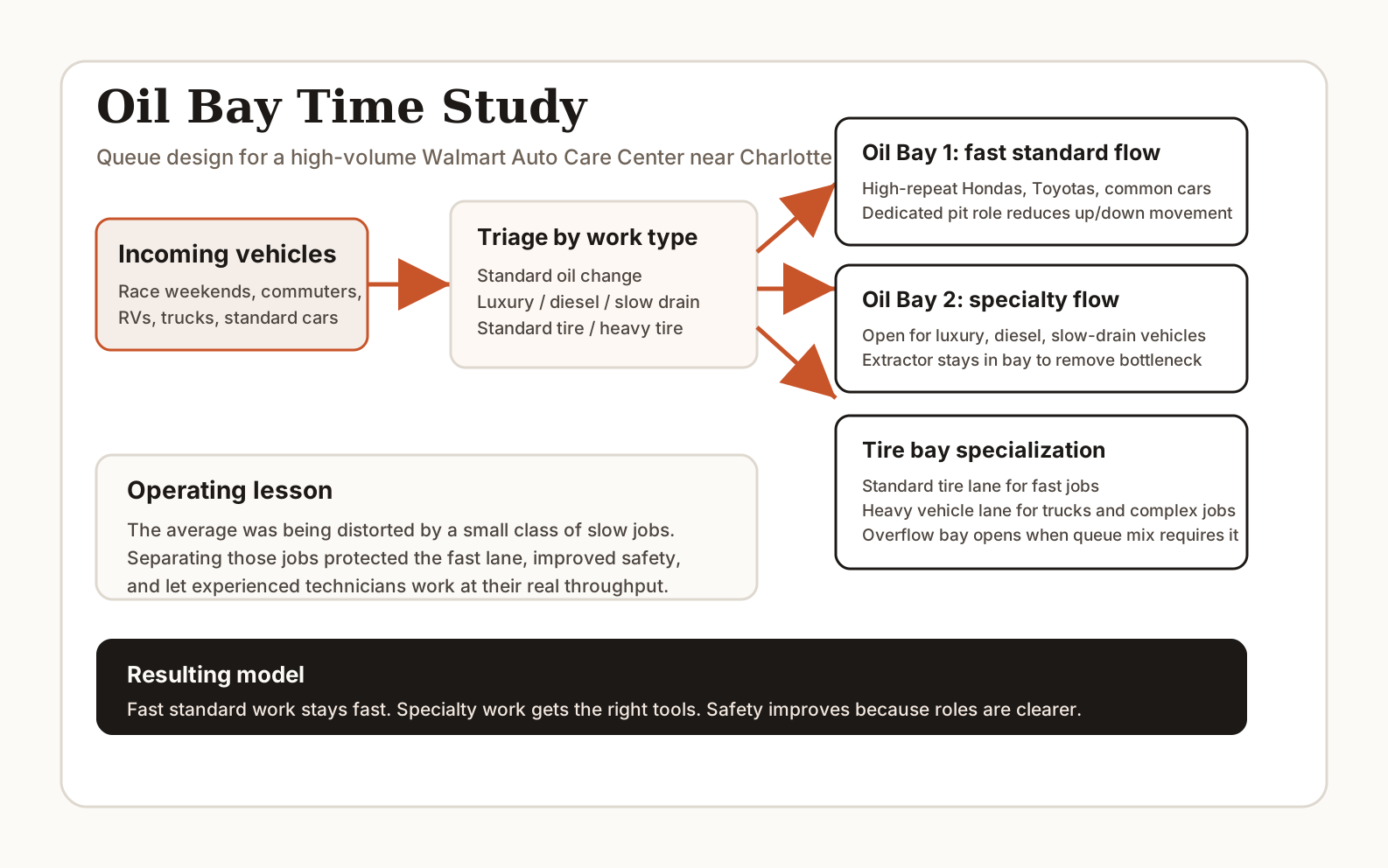
The proposed routing assigned standard work a clear lane and specialty work to a bay where an extractor or other appropriate setup could run alongside it. Tire work followed the same physical logic: a standard car and a heavy vehicle did not ask the same thing of a technician's body or the bay's clock.
Safety is part of the flow
Safety was part of the routing decision. Moving repeatedly between the pit and top-side work created opportunities for fatigue and missed steps. Keeping one person in the pit let another handle pressure checks, vacuuming, washer fluid, and tool placement while the extractor ran. The intended result was a clearer, safer sequence; no formal safety evaluation survives.
Evidence folio
A present-day flow reconstruction
Present-day reconstruction from Cole's memory of the shop. It shows the two work populations, the routing choice, and the safety-aware sequence; no contemporaneous diagram survives.
The physics of daily work
The lasting lesson became a way of seeing: study the physics, or the motion of daily life, because a queue is made of bodies, tools, handoffs, reach, waiting, and the small decisions that keep one movement from blocking another.
That way of seeing now informs healthcare strategy and quality work. A patient outreach queue, a call-center queue, a claims queue, and an auto-service queue can all look slower than they are when a small class of difficult work is mixed into standard flow. Systems engineering gives the lesson a language, but the insight started with motion: segment work that behaves differently, put tools where the work happens, and make the safe path the easy path.
That line of inquiry continues in Patient Safety and the Slack in the Institutional Line and through the healthcare roles in my operating background.
Notes
Walmart's current oil-change service and tire maintenance pages identify the service categories. My description of the earlier bay sequence and timing comes from memory.
The safety interpretation draws on the NIOSH Hierarchy of Controls (April 10, 2024), NIOSH ergonomic implementation guidance (March 5, 2024), and OSHA Safety Management. Little's 1961 queueing result explains the relationship among work-in-process, throughput, and flow time. The historical account does not include a formal safety or before-and-after flow study.