University of North Carolina at Charlotte
Science, Public Health, and Research Formation
UNC Charlotte was where pre-med became public health and evolutionary medicine. I worked in Dr. Dornburg's EvIL lab, helped Biology Club communications, learned wet-lab and R methods, presented research, and connected biology, anthropology, psychology, sociology, and population health into one operating frame.
- EvIL lab / evolutionary bioinformatics
- Wet-lab sample processing
- R statistical methods
- Spectrographic methods
- Biology Club communications
- science formation
- technical formation


Project note
In Brief
UNC Charlotte was where pre-med became public health and evolutionary medicine. I worked in Dr. Dornburg's EvIL lab, helped Biology Club communications, learned wet-lab and R methods, presented research, and connected biology, anthropology, psychology, sociology, and population health into one operating frame.
Relevant To
- pre-medical students
- public health students
- biology and evolutionary medicine learners
- student research assistants
- healthcare strategy professionals
Search Context
- how pre-med students discover public health
- evolutionary medicine and public health student story
- undergraduate biology research assistant experience
- UNC Charlotte biology public health formation
7 cited sources
In Brief
UNC Charlotte was where my pre-med path became bigger than becoming a physician. Biology, public health, anthropology, medical anthropology, EvIL lab research, Biology Club communications, and the John Snow cholera story helped me see health as biology, behavior, culture, evidence, and systems at once.
Why It Matters
I wrote this for pre-medical students, public health students, undergraduate researchers, and people trying to understand how science formation can turn into healthcare strategy.
It also speaks to students who feel pulled between clinical ambition and population-level thinking. UNC Charlotte was where I started realizing that public health was its own serious career frame, one that made medicine, biology, society, and operations make sense together.
Operating Context
I went to UNC Charlotte because I wanted to continue my education and keep moving toward medicine. At the time, I was still thinking in a pre-medical frame: biology, labs, clinical exposure, and eventually becoming a physician.
The campus was excellent for that stage of my life. It gave me difficult biology courses, real labs, public health coursework, anthropology and medical anthropology, student leadership, and research exposure. It also gave me enough intellectual breadth to connect what I had started learning at Wake Tech in psychology and sociology to the biology underneath human development, disease, behavior, and society.
That combination changed the trajectory. I did not become less interested in medicine. I became more interested in health as a system.
What We Built
There were three main builds during this period: research skill, public health identity, and communication craft.
First, I worked as a research assistant in Dr. Dornburg’s EvIL lab, an evolutionary bioinformatics environment. My work included cataloging, unfreezing, dissecting, and extracting stingray samples for testing. I also started learning statistical and spectrographic methods in R. It was hands-on science: specimens, data, methods, and the discipline of working under a research protocol.
Second, I moved deeper into public health. I still remember the first weeks of public health coursework, especially learning the John Snow cholera story and the removal of the Broad Street pump handle. That example made public health concrete. It showed that evidence, place, intervention, and population behavior could change disease outcomes.
Third, I served as communications manager for Biology Club. I arranged events, created graphics and flyers, built presentations, and learned how durable educational materials get made. That part matters more than it sounds. A lot of my later Canva, Epic MyChart, publication, and public-facing healthcare work depends on the same skill: make the science legible enough that people can use it.
Research And Lab Materials
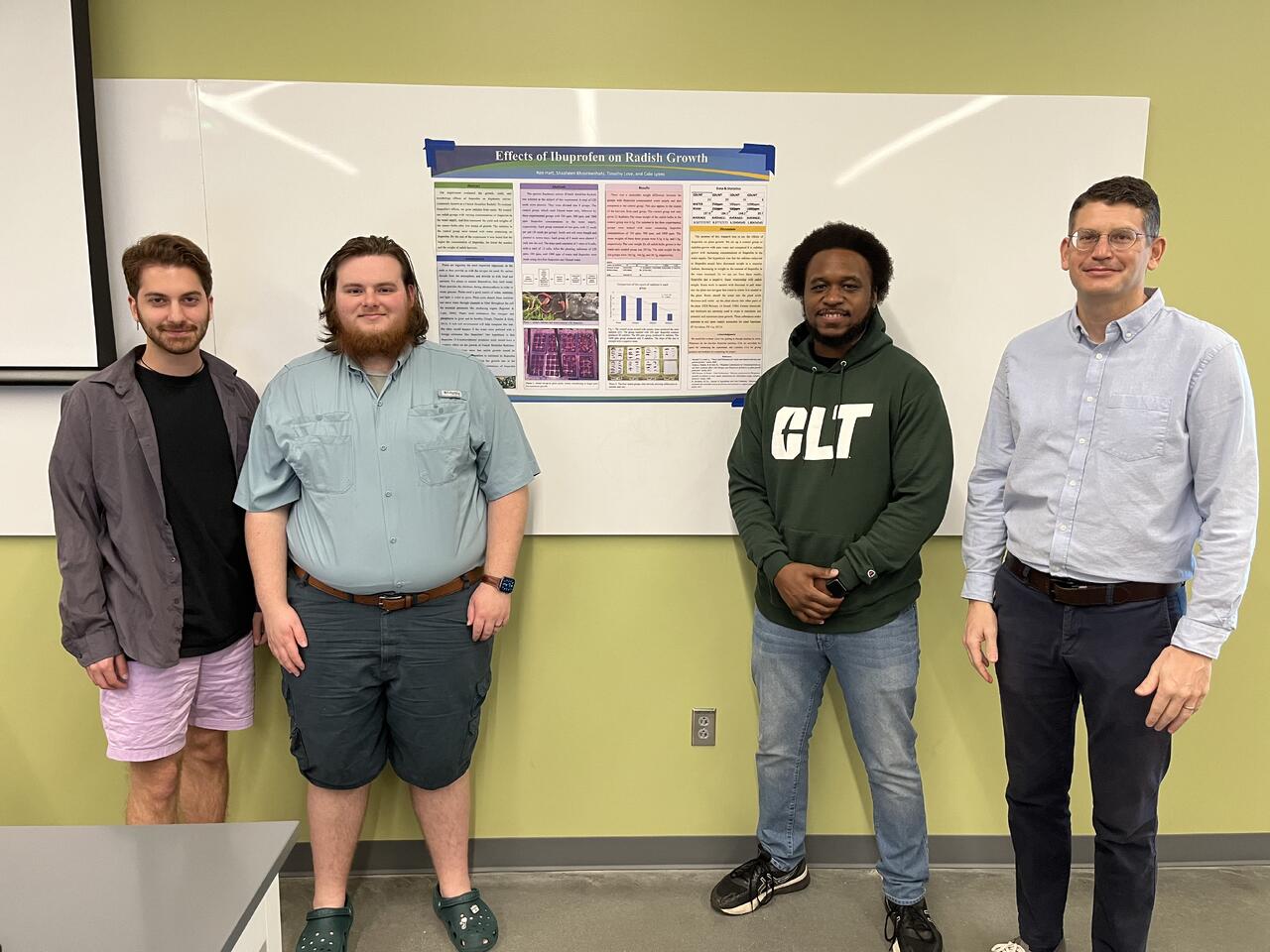
The poster came from research on the growth-related effects of ibuprofen on radish growth. It is one of the clearest public outputs from this period because it shows the early combination of biology, experiment design, measurement, and communication.
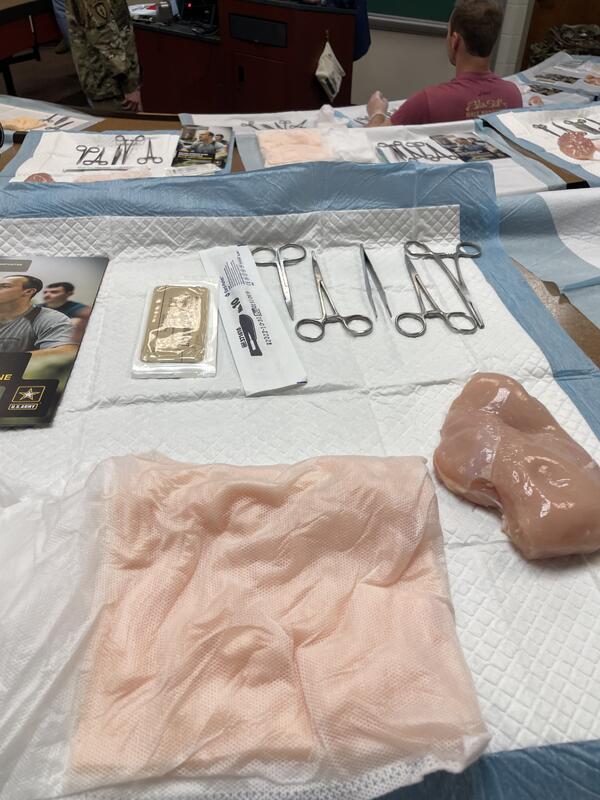
I also did a suture lab as part of an ROTC emergency medicine activity. This was part of the same pre-medical and clinical-exposure period: learning health through hands-on practice and classroom work together.
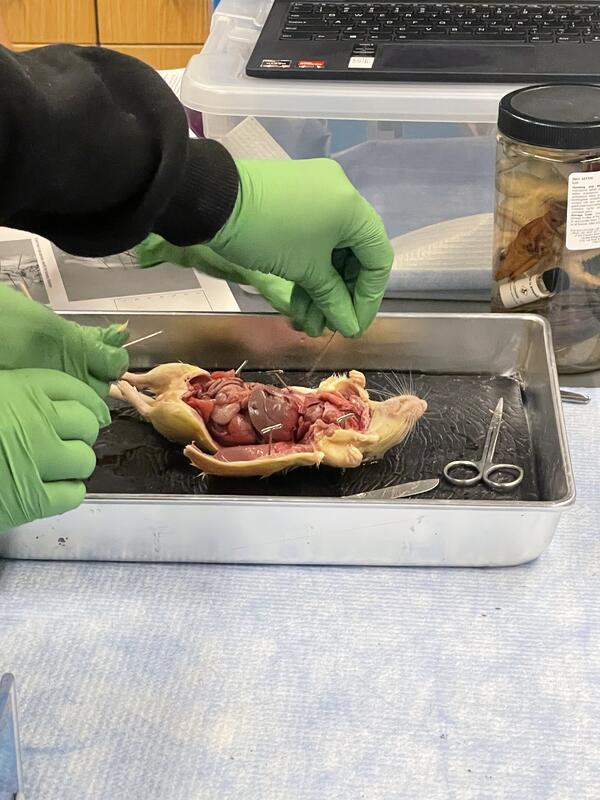
The biology lab photo is more visually direct, but it captures something important: science became real through specimens, lab work, and careful handling.
Implementation Playbook
For students using undergraduate science to find their direction, my playbook would be:
- Start with the path you think you want, but let the evidence change you.
- Take hard biology courses seriously, because difficulty is part of the filter.
- Pair biology with psychology, sociology, anthropology, and public health.
- Join a lab if you can, even if the early work is repetitive or procedural.
- Learn the methods enough to respect the data.
- Build communication materials around science: posters, flyers, presentations, club materials.
- Notice which examples stay with you. For me, John Snow’s pump handle never left.
- Treat public health as a real career frame, not a softer version of medicine.
- Get clinical exposure, but do not assume the physician path is the only serious path.
- Keep asking whether you are more drawn to individual treatment, population prevention, research, operations, or systems design.
The useful part of UNC Charlotte was not that it handed me one answer. It gave me enough different forms of evidence to update the question.
Standards, Governance, And Validation
The standards in this period were scientific and communicative.
In the lab, the standard was careful handling, documentation, and respect for methods. Cataloging, unfreezing, dissecting, and extracting samples trained the habits that make research possible: precision, sequence, cleanliness, and traceability.
In public health, the standard was evidence linked to action. The John Snow story matters because it shows observation, geography, and intervention changing a public outcome.
In Biology Club communications, the standard was usability. A flyer, event graphic, or presentation succeeds only if someone can understand what is happening and why it matters.
Those standards later carried into my work on patient education graphics, Epic outreach messages, plan-material AI tools, and speech analytics validation. Different domain, same discipline: evidence has to become usable.
The immediate bridge from this period was iScribe ambulatory documentation, followed by Jefferson clinical floor formation and later population-health work like the Epic/MyChart messaging overhaul.
Results And Evidence
| Signal | What It Shows |
|---|---|
| EvIL lab research assistant work | I learned wet-lab discipline, sample processing, and early computational/statistical methods. |
| Stingray sample handling | Biology became procedural, physical, and concrete. |
| R and spectrographic methods | Technical analysis started connecting to biological research. |
| Public health coursework | I recognized public health as a career frame. |
| Anthropology and medical anthropology | Health became cultural and social as well as biological. |
| Biology Club communications | I learned to create durable science and event materials for other people to use. |
| Medical assistant certification during this period | The pre-medical path turned into direct clinical credentialing before the move to Philadelphia. |
The strongest evidence is the public research poster and the direct continuity into later work: Jefferson clinical-floor formation, population health messaging, colorectal screening outreach, and healthcare AI validation.
My Operating View
UNC Charlotte is where I stopped thinking of health as only a clinical destination.
I went in as pre-med. I came out much more interested in public health, evolutionary medicine, medical anthropology, and systems. That did not mean medicine became less important. It meant medicine became one layer in a much larger system of biology, culture, incentives, environment, behavior, and evidence.
The John Snow example is still one of the cleanest operating lessons in healthcare: find the pattern, understand the mechanism enough to act, intervene at the system level, and measure whether reality changes.
That is still how I think. Whether the work is a care-gap graphic, a call-center quality model, a Medicare benefit assistant, or a research poster, the work is the same: turn evidence into an intervention people can actually use.
Reusable Checklist
Use this checklist if you are a pre-med or science student trying to decide where your interest is really pointing:
| Question | Why It Matters |
|---|---|
| Do you like individual patient care, population prevention, research, or systems most? | These are related, but they are different careers. |
| Which class changed your model of reality? | The most important class may not be the one with the highest prestige. |
| Have you worked with real specimens, data, or protocols? | Science becomes different when it becomes procedural. |
| Can you explain the science to other students? | Communication is part of scientific usefulness. |
| Do you understand health culturally and biologically? | Anthropology and sociology prevent narrow clinical thinking. |
| What public health example do you still remember months later? | Durable examples often reveal the career frame that fits. |
| Have you built anything others used? | Flyers, posters, presentations, and events are early operating proof. |
The practical advice is to let undergraduate science widen your options. Pre-med can become medicine, but it can also become public health, research, healthcare operations, health systems engineering, policy, analytics, or strategy.
References
UNC Charlotte, the EvIL lab, my ResearchGate poster, and public institutional sources provide the external context. Lab and student-organization details come from my own undergraduate work and should stay conservative if expanded later.
The undergraduate research poster is presented as a public research poster and formation signal, not as a peer-reviewed publication. The broader claim is limited to the operating lesson: UNC Charlotte connected biology, public health, anthropology, research methods, clinical ambition, and communication into the frame that later shaped my healthcare work.
Frequently Asked Questions
- How did UNC Charlotte change my path?
- UNC Charlotte helped shift me from a narrow pre-med identity into a broader public health and evolutionary medicine frame. Biology, anthropology, medical anthropology, public health, wet-lab research, and Biology Club communications all made health feel like a population, systems, and evidence problem.
- What research did I do at UNC Charlotte?
- I worked as a research assistant in Dr. Dornburg's EvIL lab, where I cataloged, unfroze, dissected, and extracted stingray samples for testing while learning statistical and spectrographic methods in R.
- Why did John Snow matter in this story?
- The John Snow cholera story made public health concrete: disease prevention could come from evidence, geography, intervention, and systems thinking. That helped me recognize public health as a career direction and not merely a course topic.
Cited Sources
- EvIL Lab Dornburg Lab
Public context for the evolutionary ichthyology / bioinformatics lab environment I worked in.
- The growth-related effects of 2-(4-isobutylphenyl) propionic acid on Raphanus sativus ResearchGate
Public research poster from my UNC Charlotte period.
- UNC Charlotte Department of Biological Sciences University of North Carolina at Charlotte
Public context for the biology academic environment.
- UNC Charlotte Public Health Sciences University of North Carolina at Charlotte
Public context for the public health academic environment.
- John Snow Site National Academies Press
Public health history context for the Broad Street pump / cholera lesson that shaped my interest in public health.
- International Society for Evolution, Medicine, and Public Health ISEMPH
Public context for evolutionary medicine as a field.
- Society for Medical Anthropology Society for Medical Anthropology
Public context for medical anthropology as a field connecting health, culture, and social systems.